Camp lighting has three different jobs
A headlamp, a table lantern and a work light solve different problems. Compare Black Diamond and COAST products through official photos and practical examples.
The light that helps you walk away from camp is not necessarily the light you want between two people eating dinner. A third job appears when you need both hands free beside a drawer, a workbench or a piece of equipment. Thinking about those three situations makes a lighting shortlist more useful than sorting products by maximum lumens.
This article compares product designs and manufacturer specifications. AllEquipped has not measured these lights or tested them side by side. Official photography is used with permission.
The light that stays with you
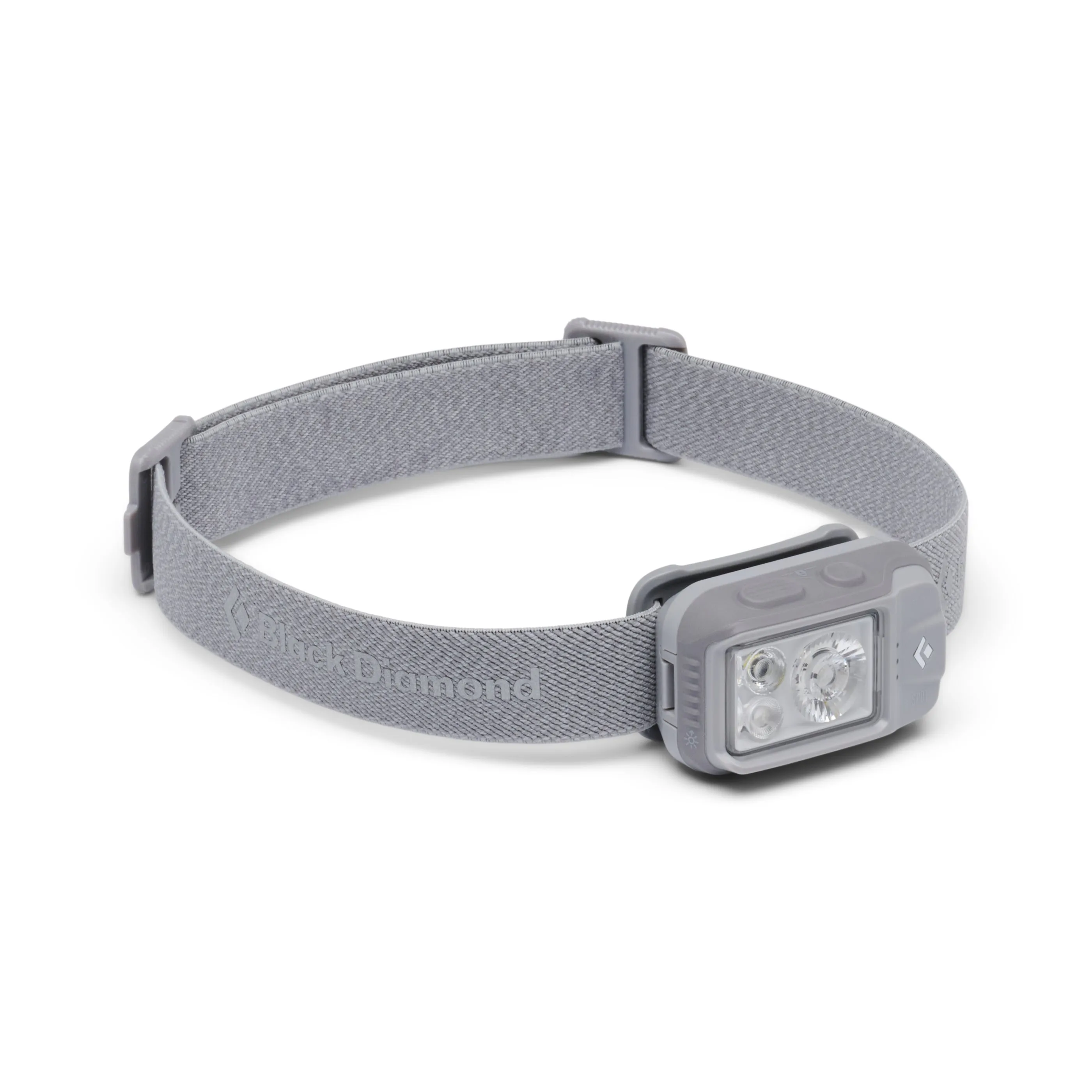
Courtesy of Black Diamond Equipment.
A headlamp follows your view and leaves your hands free. The current Black Diamond Spot lists 450 lumens and accepts AAA batteries or the separately sold BD 1500 rechargeable battery. The power source is part of the buying decision: choose what you can recharge or replace during the trip, and check the exact model rather than borrowing specifications from an older Spot.
For shared spaces, remember that a headlamp moves whenever you turn toward someone. A lower setting and deliberate positioning can be more comfortable than leaving the highest mode on. Our Spot-versus-Storm guide compares the current models and their charging arrangements.
The light that belongs to the table
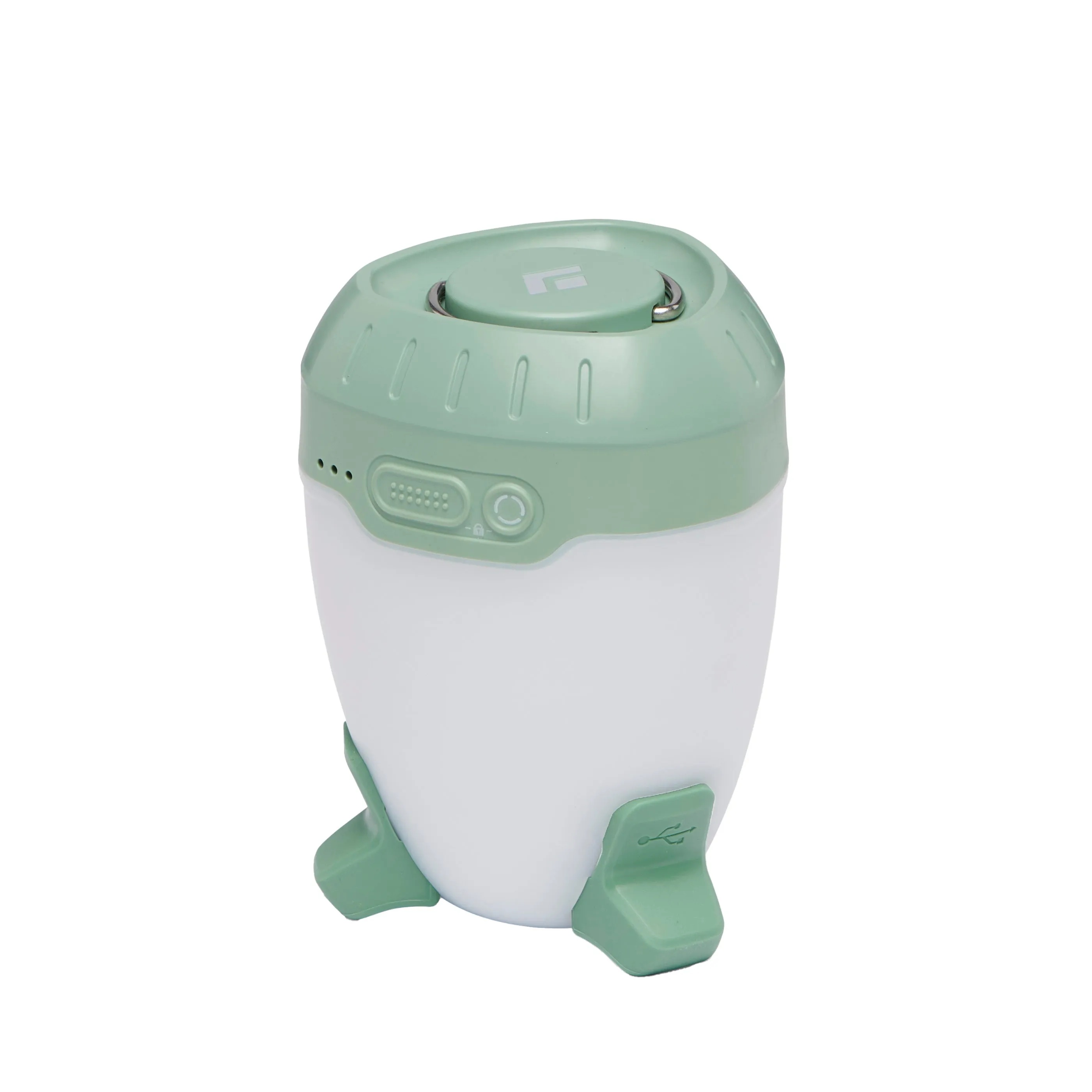
The Orbiter 450, pictured at the top, is an area lantern with adjustable brightness, USB-C charging and USB-A power output. Black Diamond lists a 272g weight, two hours on high and 120 hours on low. The long runtime belongs to the low setting, not its 450-lumen maximum.
Those details make it a useful example of a shared camp light. Placement still matters: check that the lamp illuminates the surface without sitting directly in everyone’s sightline. Device charging also draws from the battery that powers the lantern, so plan for both jobs. See our Orbiter 450 and 650 comparison before trading lower weight for a larger battery and different tabletop arrangement.
The light that stays on the task
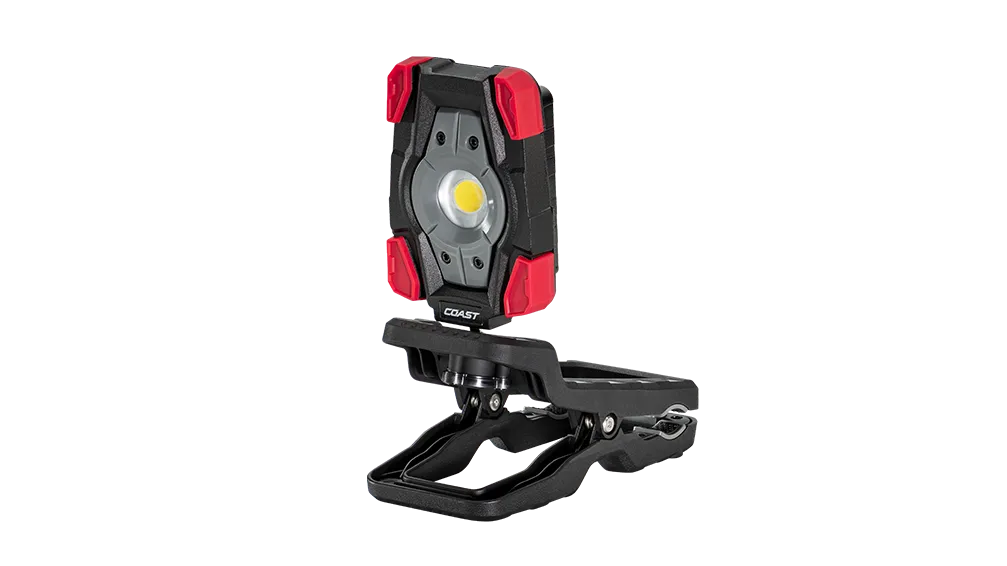
CL20R clamp light. © COAST. Used with permission.
The COAST CL20R offers a clamp that doubles as a stand, magnetic mounting and a fixed flood beam. The useful distinction is placement: the light can remain aimed at a work surface while you move. Confirm that the actual mounting surface is suitable and the light is secure before relying on it.
COAST lists 1,750 lumens for 3.75 hours on high and 200 lumens for 16 hours on low. Those paired figures tell a clearer story than putting the highest output next to the longest runtime. The built-in battery charges through USB-C. Our CL20R review covers the specifications and the limitations of the mounting options.
Pack around the jobs you actually have
For a walking-focused trip, the headlamp may do most of the work. A shared camp table makes a lantern more attractive. A vehicle-supported trip with equipment tasks can justify a separately positioned work light. You do not need all three simply because all three exist.
Before packing, check charged batteries, the correct cables and usable brightness settings. Try the placement with your actual table or storage layout. This is the part a studio photograph cannot establish, and the part that decides whether a light is convenient every evening.
Browse the Black Diamond lighting range and COAST product guide, or explore the official product-photo collection.