Rope rescue, rope access, fall protection: three jobs, one pile of gear
Lay the three kits on a bench and they look identical. They aren't. What separates the disciplines, the standards that govern each, and which of the brands we rate belongs in which box.
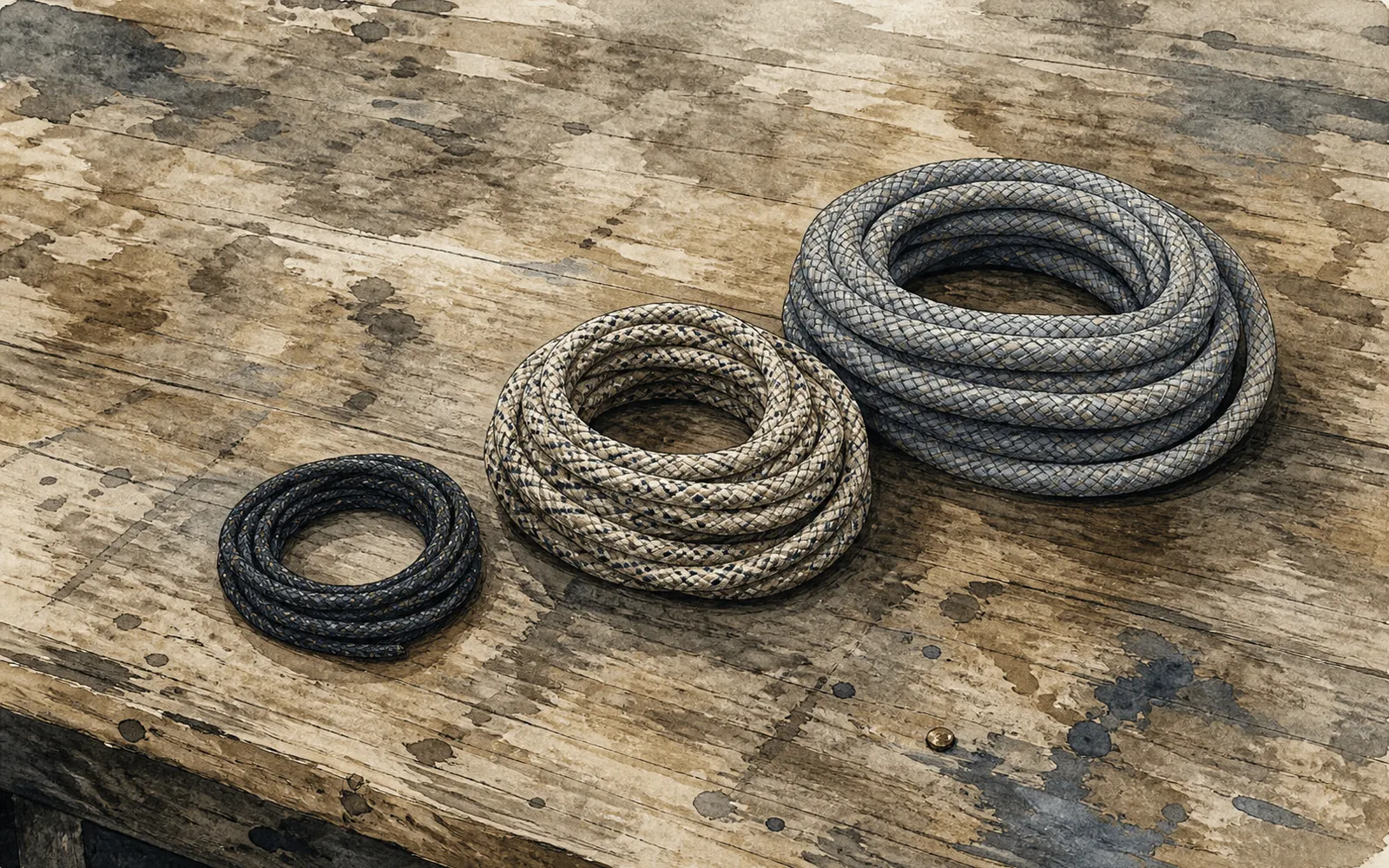
Lay the three kits side by side on a bench and they look like the same kit. Rope, a harness, a lot of anodized aluminum, a bag that’s seen better days.
The difference isn’t the hardware. It’s the question the rope is answering.
Fall protection is the rope you hope never loads
Someone is standing on something — a roof, a platform, a tower — doing a job that has nothing to do with rope. The lanyard or self-retracting device is insurance against a bad step. In a good year it never takes a load at all.
The legal floor in the US is OSHA: 1926 Subpart M for construction, 1910 Subparts D and I for general industry. The engineering detail sits one level down, in the ANSI/ASSP Z359 Fall Protection Code — Z359.11 for full-body harnesses, Z359.12 for connectors, Z359.13 for energy-absorbing lanyards, Z359.14 for self-retracting devices.
Z359.14 is the one worth knowing about, because it changed recently and the change is easy to miss. The 2021 revision took effect on 1 August 2023 and retired the old Type A / Type B split. Self-retracting devices are now Class 1 and Class 2, and the standard draws that line by anchorage and free fall: Class 1 for overhead anchorages with a maximum 2 ft free fall, Class 2 for applications where an overhead anchorage may not be available or feasible, with a maximum 6 ft free fall over an edge. Manufacturers usually paraphrase it as at-or-above the dorsal D-ring versus above or below it — fair shorthand, but not the text.
Maximum deceleration distance is now a single 42 inches for both classes, where the old Type A allowed 24 inches and Type B allowed 54. Test mass went from 282 lb to 310 lb. Permitted average arresting force rose from 900 lb to 1,350 lb — in ambient conditions; conditioned testing permits 1,575 lb, and that second number usually goes missing. (3M publishes a clear summary of the changes. The Class 2 side, and the 0.005 inch edge that qualifies one, gets its own post: what makes an SRL leading edge.)
The practical version: if you’re replacing SRLs bought before mid-2023, the labels on the new ones won’t read the way your safety manager expects, and the old ones aren’t automatically non-compliant. Both are true at once, and it causes arguments.
Among the brands we rate, the fall protection names include Skylotec, Petzl, ISC Wales, Edelrid, CAMP Safety, Singing Rock and FallTech. Skylotec is the odd one out in a useful way — Neuwied since 1947, and the only name here that also builds the permanent safety system bolted to the building, not just the kit the worker clips into it.
Rope access is the rope you stand on
Rope access inverts the relationship. The rope isn’t insurance, it’s the floor. Technicians descend, ascend and hold position on rope in order to do the actual work: inspection, welding, sealant, glass, blade repair.
No single equipment standard owns the discipline. It’s governed by training bodies instead — SPRAT in North America, IRATA internationally. Both certify technicians across three levels, and both rest on the same non-negotiable: two ropes, always. A working line and a backup line, independently anchored, so no single failure puts anyone on the ground.
That principle is why the hardware looks the way it does. A descender has to hold position hands-free, because both your hands are doing the job you came for. A backup device has to track the second line untended. A harness has to be tolerable to hang in for eight hours, which is a different design problem from surviving one fall.
This is the deepest category we cover, and most of the brands we rate have a stake in it — Petzl, ISC Wales, CMC, Edelrid, Sterling Rope, Rock Exotica, Skylotec, DMM, CAMP Safety and Singing Rock among them. Petzl is the spine of most kits, including ours — which is exactly why it’s worth deliberately asking whether something else fits a given job better.
Rope rescue is the rope that carries someone else
Rescue is where the margins matter most. You’re not protecting yourself while you work. You’re building a system, often quickly and often improvised around whatever the structure gives you, to move a person who can’t move themselves. Frequently that means a litter and an attendant on the same line — two-person loads, and the safety factors that follow.
The governing document is NFPA 2500. The 2022 edition consolidated three standards that used to live apart: NFPA 1670 (operations and training), NFPA 1858 (selection, care and maintenance) and NFPA 1983 (life safety rope and equipment). Sterling wrote up the transition well.
Buy rescue gear today and you’ll see dual markings. Equipment carries both the legacy 1983 designation and the new 2500 reference for the duration of the transition; the 1983 marking disappears in 2027. Manufacturers stopped labeling to the 2017 edition of 1983 in March 2023, though stock built before then stayed in circulation well after. None of this makes older gear unsafe. It does mean two near-identical devices on the same shelf can carry different label text, and it’s better to know why before someone flags it mid-audit.
On the rescue side you’ll find CMC, Rock Exotica, Sterling Rope, Petzl, ISC Wales, Skylotec, CAMP Safety and Singing Rock, among others. CMC has been rooted in rescue since 1978 and is the one teams tend to build a whole capability around. Rock Exotica machines the precision hardware everyone else’s system quietly ends up using. Sterling makes life-safety cordage in Maine — the rope a lot of the other brands’ hardware runs on.
The overlap is real. The ratings aren’t.
Plenty of gear crosses over, and good manufacturers design for it. A harness can be certified to both EN and NFPA. Edelrid and Sterling rope turns up in rescue caches and rope access kits alike — Edelrid has been making rope since 1863, and introduced the kernmantle construction in 1953 that nearly every rope on this page still uses.
What doesn’t cross over is the rating. A device certified for one-person technical use is not a two-person general-use device. An SRD built for a worker on a roof is not a rescue tool, however solid it feels in the hand. The label on the side is the entire answer, and the time to read it is before it’s the only thing between someone and the deck.
Two that sit outside the three boxes
DMM hot-forges in Llanberis and has since 1981 — the last climbing hardware manufacturer left in Britain. Its center of gravity is rigging and arborist work rather than industrial fall protection.
Teufelberger has been making rope since 1790, still 100% family-owned across more than seven generations, and is the name arborists reach for first. Tree work is its own discipline with its own techniques, and it earns its own post.
How to pick
If you’re unsure which category a job falls into, one question usually settles it. Is the rope keeping you safe while you work, is it holding you up while you work, or is it getting someone else out?
Each answer points at a different shelf, a different standard and often a different brand. Getting it wrong is expensive in the best case.
The brands named above are the ones most relevant to these three disciplines — they aren’t the whole roster. These are brands we use and recommend, written up by people who use them, and the full list with what each is actually good at lives on Brands We Love. When one of them becomes a stockist, we’ll say so on the page.