A camp kitchen knife and a pocket tool have different work to do
A closer look at Boker's Outdoor Cuisine III and Atlas Multi SW: food preparation, everyday cutting, blade mechanisms and packing, with official photos.
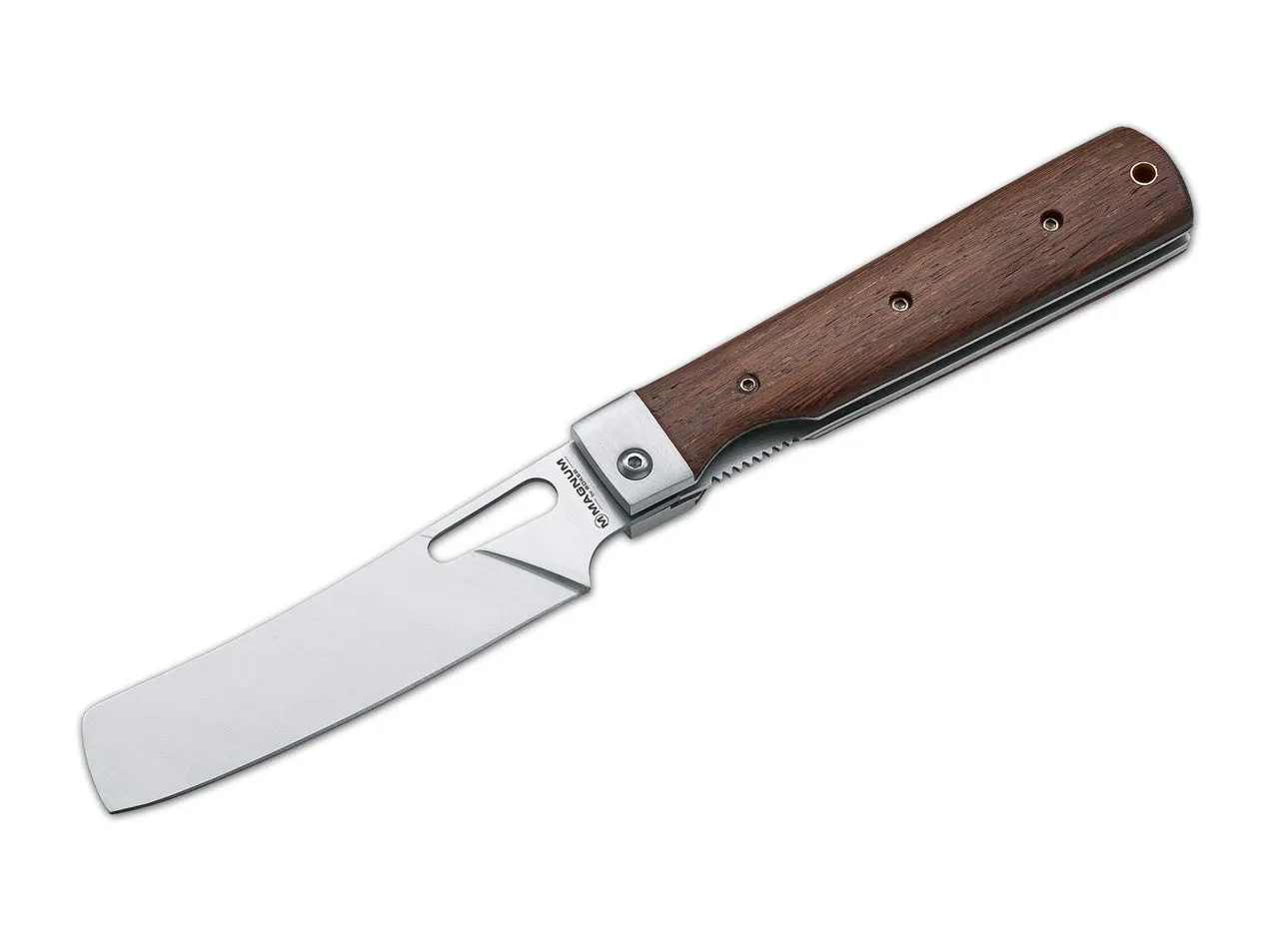
Opening a food packet and preparing the meal inside it are different cutting jobs. The first favors a convenient tool that is close at hand. The second brings the cutting board, blade shape, handle and cleanup into the decision. Two products from Boker’s catalog show why a single label such as “camp knife” can hide useful differences.
These are researched product notes, not a hands-on edge or durability test. Boker permits editorial use of its official photographs; each photograph links to the matching product.
Give food preparation its own place
The Magnum Outdoor Cuisine III, SKU 01MB432, pictured above, brings a broad kitchen-oriented blade to a folding format. Boker’s current listing specifies a 12cm blade, a tulip wood handle, a liner lock and 7Cr17MoV steel. The page explicitly corrects older catalog steel information, which is a good reason to check the current SKU rather than copy a retailer’s summary.
For a camp kitchen, look beyond how the knife folds. Consider the space available on your cutting board, clearance around your hand and where the tool can dry after cleaning. A folding joint adds an area to inspect and clean. We have not evaluated this model’s grip, cutting feel or ease of cleaning, so those remain things to assess in person.
There is also a simple packing question: does the folded format solve a real storage problem in your kitchen box? If a familiar kitchen knife already travels securely and works well, a new tool needs to earn its space. This model is an option to investigate, not evidence that every camp kitchen needs a specialized knife.
Keep everyday utility cutting separate
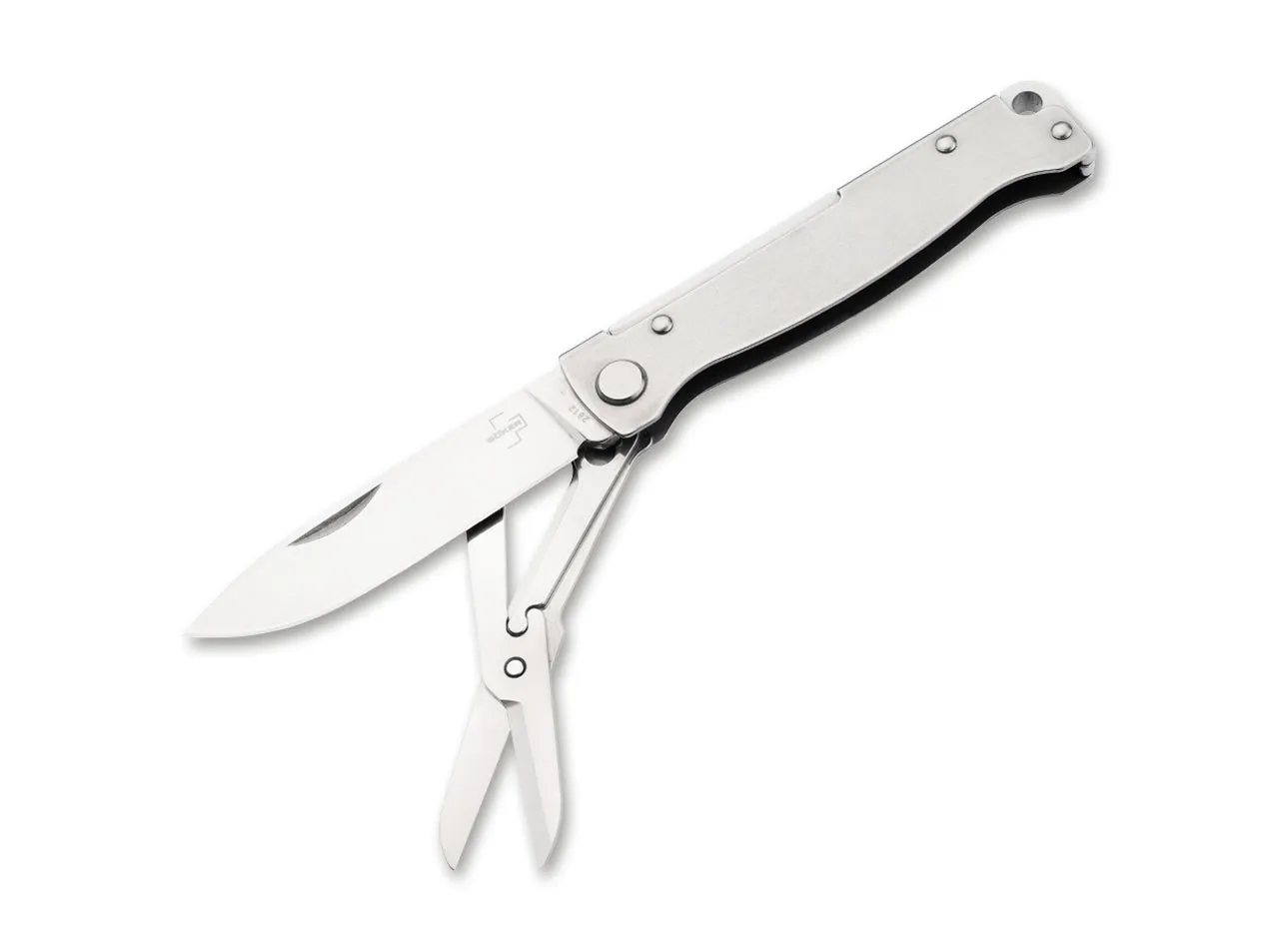
Atlas Multi SW, SKU 01BO857. © Boker. Used with permission.
The Boker Plus Atlas Multi SW takes a different approach: a 12C27 drop-point blade, steel handle and integrated scissors in a pocket format. Boker identifies it as a slipjoint. The blade does not lock open; it is not the separately named Atlas Backlock model.
Scissors give this tool a reason to be considered alongside a plain folder. For small packaging and similar everyday tasks, compare which implement you would actually reach for. The manufacturer description establishes the features, but it does not tell us how comfortable the scissors will be in your hand or how their performance changes with repeated use.
Choose by the work, then check the mechanism
| Planning question | Outdoor Cuisine III | Atlas Multi SW |
|---|---|---|
| Main reason to investigate it | Folding format for food preparation | Pocket utility with blade and scissors |
| Mechanism in the current listing | Liner lock | Non-locking slipjoint |
| Detail worth checking in person | Board clearance and cleaning access | Grip and scissors operation |
These are different formats, not an overall winner and loser. Keep a food-preparation tool clean and separate from dirty utility work. Follow the manufacturer’s handling and care instructions; neither knife is a pry bar. A locking mechanism also does not make unsuitable cutting tasks appropriate.
Our Atlas Backlock-versus-Multi comparison explains the naming distinction. The four-model camp-knife guide adds fixed-blade alternatives, while the Boker brand guide shows more of the range in official photographs. Use those pages to narrow the shortlist around your chores, then check the exact model before buying.