Boker Atlas Backlock Big vs Multi SW: which pocket tool fits the task?
Short answer
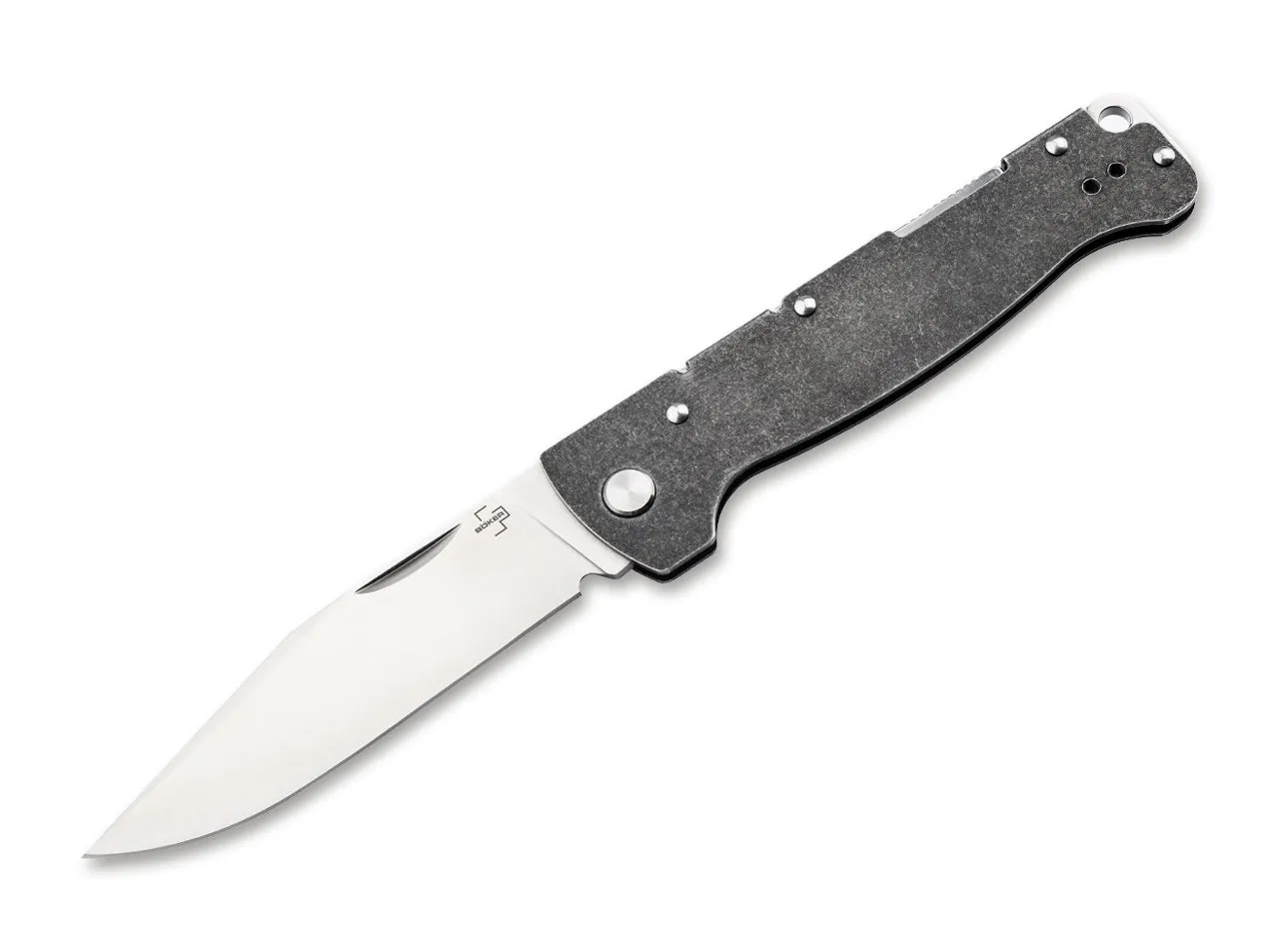
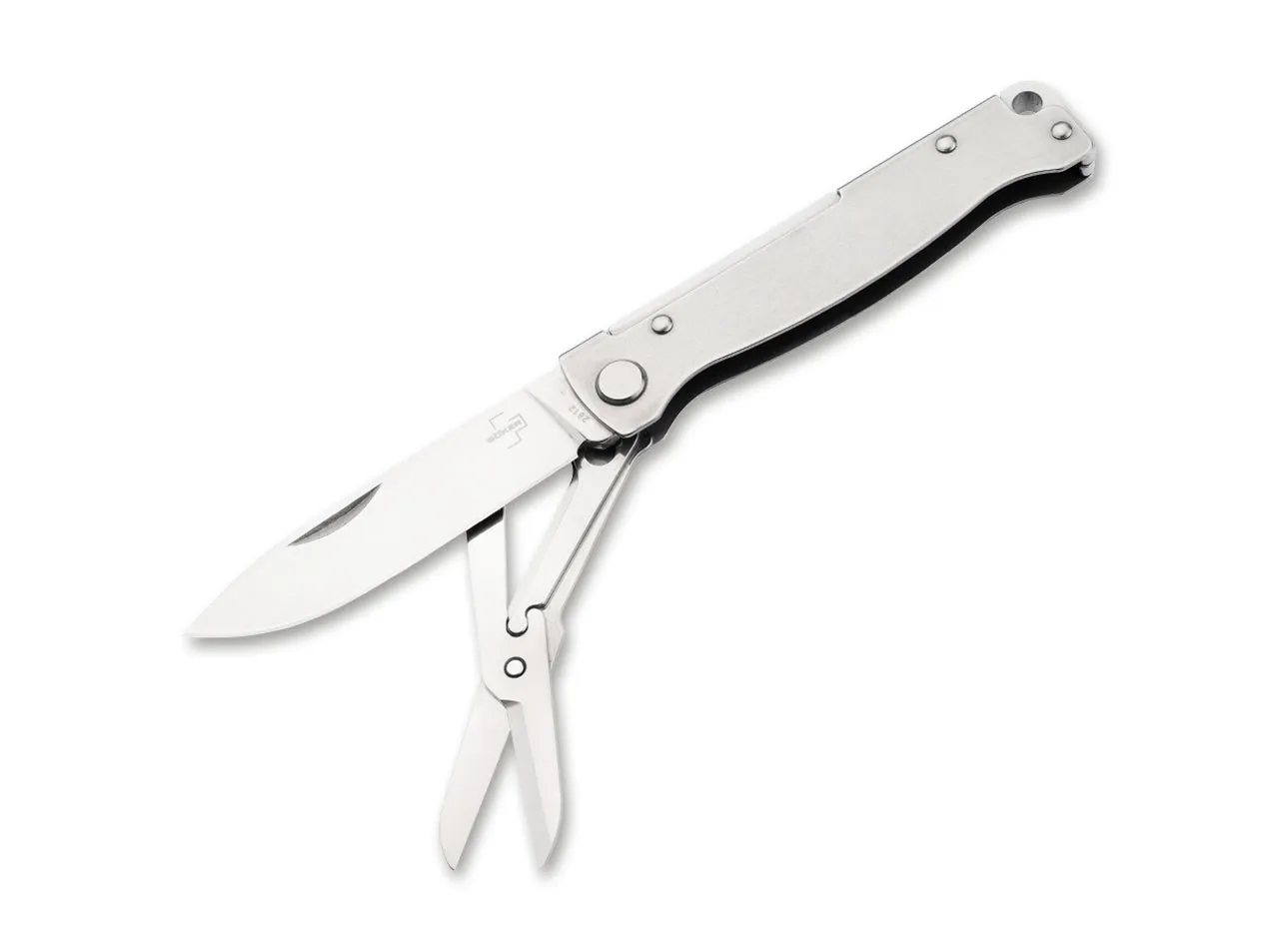
Choose the Atlas Backlock Big if you want a locking blade in this steel-handled family. Consider the Atlas Multi SW if integrated scissors are more useful and you accept its non-locking slipjoint. Both use 12C27 steel, but their blade shapes and mechanisms differ. Compare the exact SKU rather than buying by family name.
Researched comparison based on current manufacturer information. These products have not been hands-on tested by AllEquipped.
What is different beyond the Atlas name?
The blade mechanism and the extra tool make these distinct choices. The official Boker listings identify:
| Feature | Atlas Backlock Big | Atlas Multi SW |
|---|---|---|
| SKU | 01BP0062 | 01BO857 |
| Blade steel | 12C27 | 12C27 |
| Blade shape | Clip point | Drop point |
| Mechanism | Backlock | Slipjoint |
| Opening | Two-hand, nail nick | Manual, nail nick |
| Handle | Stainless steel | Stainless steel |
| Additional scissors | Not listed | Included |
| Blade length | 9 cm | 6.7 cm |
| Overall length | 20.9 cm | 16.4 cm |
| Blade thickness | 2.3 mm | 2.4 mm |
| Weight | 89 g | 90 g |
| Place of manufacture | Asia | Asia |
| Blade hardness (HRC) | Not published | Not published |
Every figure is Boker’s own listing on boker.de, not our measurement.
Use those exact SKUs when comparing retailer listings. An Atlas family name does not establish which mechanism you are buying, and a similar-looking handle is not enough to distinguish the products.
Who should shortlist the Backlock Big?
Shortlist it when you specifically want a locking blade and prefer a simple cutting tool. Boker describes two-hand nail-nick opening, a pocket clip and a lanyard hole. The lock is a mechanism choice; we have not tested its strength, wear or long-term operation.
For ordinary camp use, think through the cutting jobs you actually repeat. Opening packaging and preparing a small snack do not establish suitability for heavy chopping, prying or other uses outside the product’s instructions. Compare dimensions and the fit in your hand before deciding that the larger model is the more useful one.
Atlas Multi SW. © Boker. Used with permission..
When are the Multi SW’s scissors more useful?
The scissors make the Multi SW worth considering for small jobs where a blade is awkward: trimming a loose thread or making a controlled cut in lightweight packaging, for example. Those are suggested uses, not results from our testing. Check the tool against the material and follow its instructions.
The Multi SW remains a slipjoint knife. It does not gain a blade lock because it adds scissors, and it should not be confused with the Backlock model. Decide whether you value that second cutting tool enough to choose this format.
How do they compare with a fixed blade?
A folding pocket tool offers a different carrying arrangement from a sheathed fixed blade. Our M.U.K. review and Boker camp-knife guide cover that alternative.
We would choose the tool format first, then compare exact dimensions, materials and the supplied carry hardware. Steel type alone cannot tell you how either knife will feel in use or how long its edge will last in your particular tasks. These are source-based buying notes; we have not performed cutting, corrosion or durability tests.
Explore the Boker brand guide or browse more gear with official photos.
The short version
Pick between these two by mechanism first. The Boker Plus Atlas Backlock Big 01BP0062 is the locking option: a clip-point 12C27 blade with a backlock and two-hand nail-nick opening. The Atlas Multi SW 01BO857 is a non-locking slipjoint with a drop-point 12C27 blade and integrated scissors, which earns its place if small trimming jobs come up more often than longer cuts. Boker lists the Backlock Big as the longer knife, yet the two weigh almost the same on paper. Neither listing names a country beyond Asia or publishes a hardness figure, so compare the exact SKUs rather than the Atlas family name, and treat everything here as manufacturer information rather than test results.
Specifications checked September 24, 2026, and rechecked October 3, 2026. Official photographs used with permission.
Quick answers
- Does every Boker Atlas knife have a locking blade?
- No. The Atlas Backlock Big 01BP0062 has a backlock; the Atlas Multi SW 01BO857 uses a non-locking slipjoint.
- Which of these Atlas models includes scissors?
- Boker lists integrated scissors on the Atlas Multi SW, SKU 01BO857. They are not a listed feature of the Atlas Backlock Big.
- How do the Boker Plus Atlas Backlock Big and Atlas Multi SW compare in size and weight?
- Boker lists the Atlas Backlock Big 01BP0062 at 20.9 cm overall with a 9 cm blade, 2.3 mm thick, weighing 89 g. It lists the Atlas Multi SW 01BO857 at 16.4 cm overall with a 6.7 cm blade, 2.4 mm thick, weighing 90 g. On those listings the shorter Multi SW is the heavier knife by 1 g, which is subtraction rather than a published figure. Boker USA lists the same two knives at 3.14 oz and 3.17 oz.
- Where are the Boker Plus Atlas Backlock Big and Atlas Multi SW made?
- Boker does not name a country. The boker.de pages for the Atlas Backlock Big 01BP0062 and the Atlas Multi SW 01BO857 both give the place of manufacture as "Asia", and Boker USA's listings for the same SKUs say "Made in: Asia". Both boker.de pages also name Heinr. Böker Baumwerk GmbH in Solingen, Germany, as the manufacturer, but the manufacturing field itself still reads Asia, not Germany.
- Does Boker publish a blade hardness or a scissors size for the Atlas Backlock Big and Atlas Multi SW?
- No. Boker's listings for the Atlas Backlock Big 01BP0062 and the Atlas Multi SW 01BO857 name Sandvik 12C27 steel and give blade length, thickness and weight, but no Rockwell hardness figure. The Atlas Multi SW page describes "integrated scissors for added functionality in any situation" and gives no scissors length or cutting capacity. Boker USA's pages for the same two SKUs publish no hardness figure either.