Dakota Powerbox+ shell and DL+ 60Ah: what makes a complete power system?
Short answer
The Powerbox+ shell and DL+ 60Ah battery are separate parts of a portable system. The current shell listing includes a 300W inverter but excludes the battery and charger. Dakota identifies the DL+ 60Ah as a compatible battery. Budget for the complete setup and check each load against the relevant output limit.
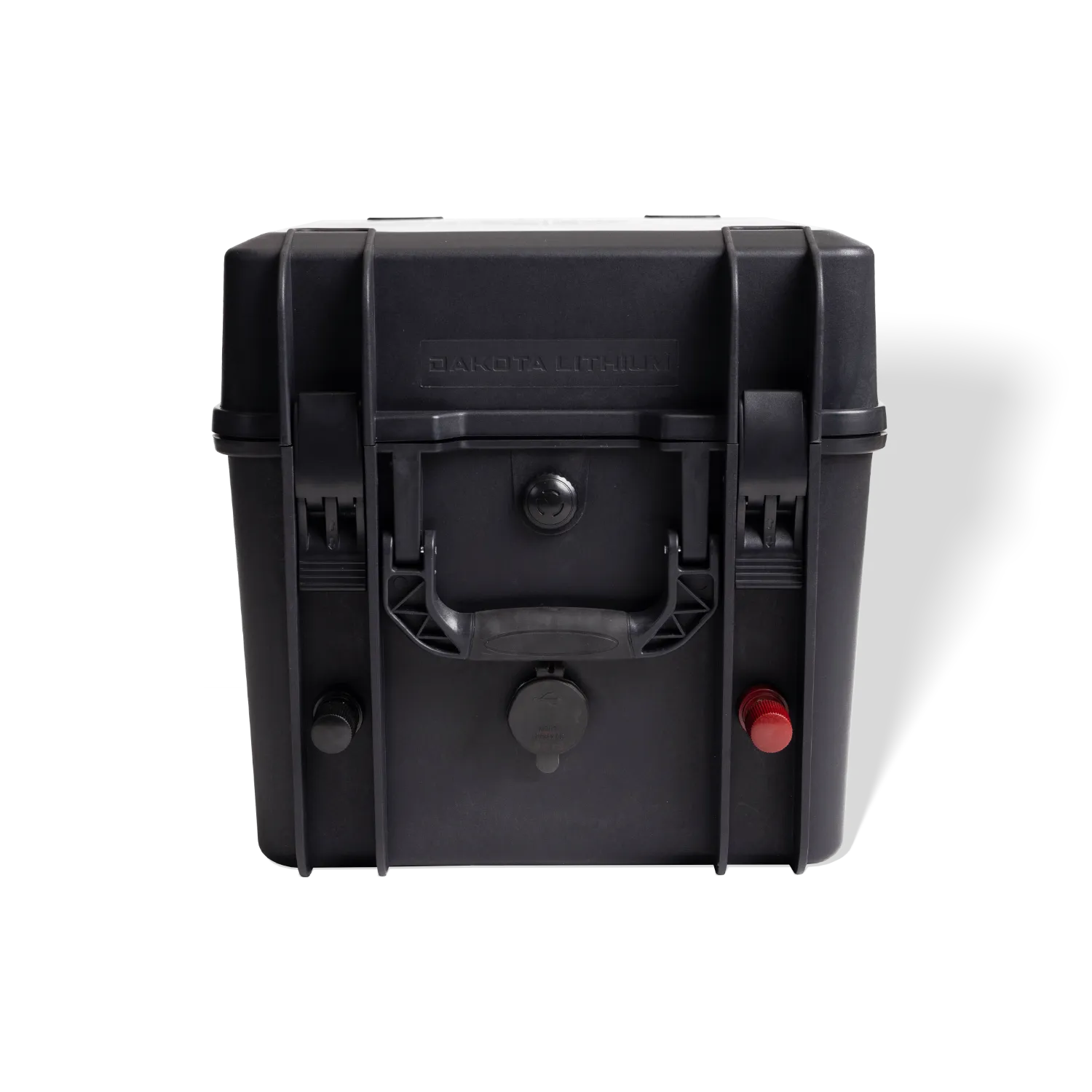
Researched comparison based on current manufacturer information. These products have not been hands-on tested by AllEquipped.
What does the shell add to a battery?
The shell adds carrying, protection and connections, including an inverter for small AC loads. Dakota’s current listing is titled “Powerbox 60 Waterproof Power Station Shell + 300W Inverter”; its instruction guide calls the product the Powerbox+ 60. The listing specifies a 300W continuous / 600W peak inverter, USB connections, a voltage display and storage space. Battery and charger are excluded.
This distinction matters when comparing prices: an empty case with electronics cannot store energy on its own. A complete power station and a shell may look similar in a product photograph while containing very different equipment.
What is the DL+ 60Ah battery’s role?
The battery supplies the stored energy. Dakota lists its DL+ 12V 60Ah as a dual-purpose model with internal heating, 16.5lb weight and 100A maximum continuous discharge. The current battery description says the charger is sold separately. Those figures describe the battery, not an assembled Powerbox package.
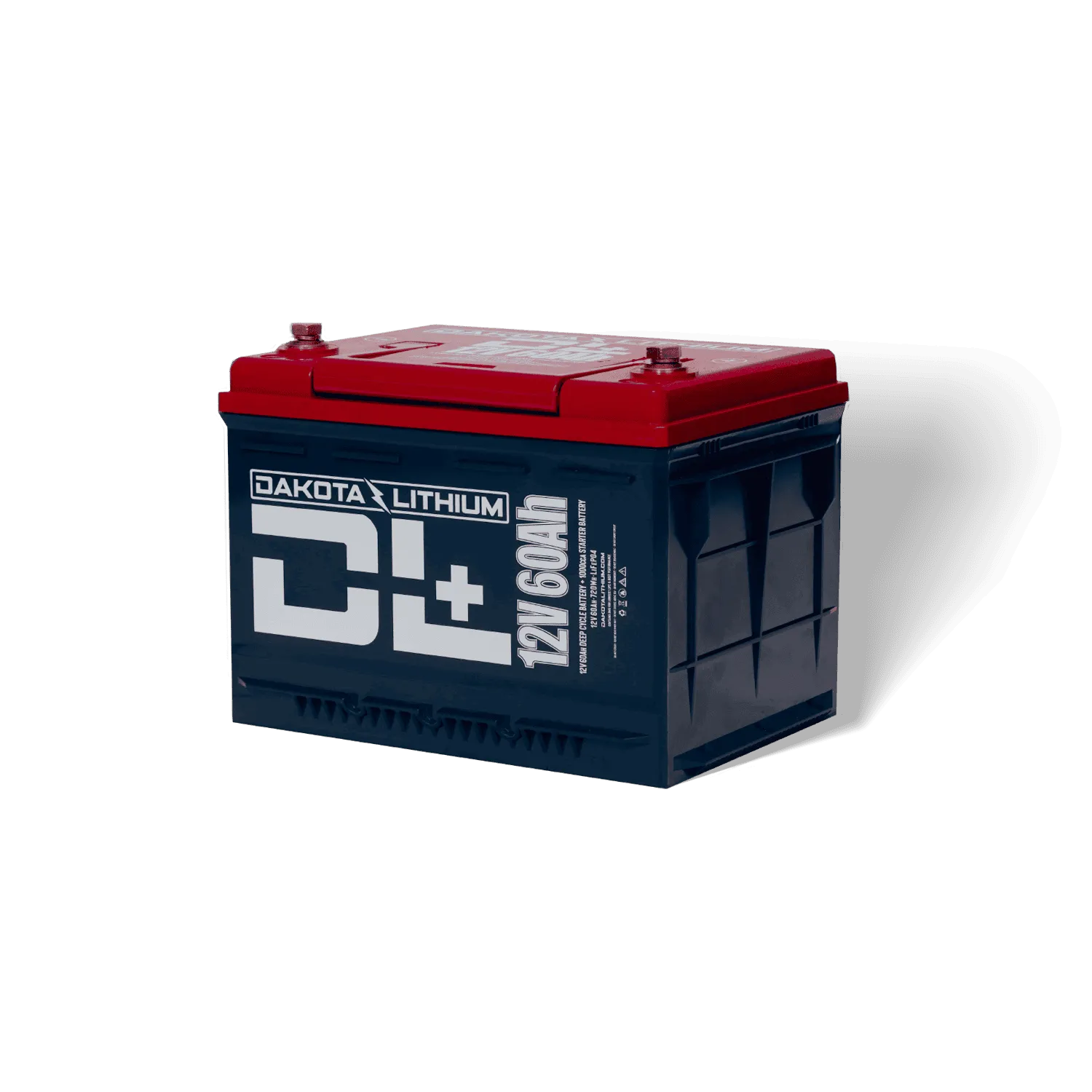
Dakota DL+ 12V 60Ah. © Dakota Lithium. Used with permission..
Dakota names this battery as the intended fit for the shell: “Designed for the DL+ 12V 60Ah battery.” Still check the exact revision, securing arrangement and connection requirements before assembling a system. A battery that fits physically does not make every possible connected device suitable.
Which limits matter for a connected device?
Use the limit of the output you are actually using. The battery’s current capability does not raise the included AC inverter’s 300W continuous rating. Check an appliance’s normal draw and starting demand, then compare its connection requirements with the manufacturer’s documentation.
A laptop charger and a high-power cooking appliance are different design problems. Make a list of the devices you intend to use rather than choosing a box first and discovering its limits at camp. Our battery versus power-station guide explains that distinction.
| Listed specification | Powerbox 60 shell + 300W inverter | DL+ 12V 60Ah battery |
|---|---|---|
| Package | “Battery and charger not included.” | “charger sold separately”; 12V 10A or 12V 20A recommended |
| Stored energy | None; it is a shell | 60Ah at 12.8V; “720 Watt-hours (Wh)” listed |
| AC output | 300W continuous, 600W peak, two AC outlets; waveform not stated | — |
| USB | “4 USB plugs” (product page); three USB at 5V 2.1A plus one smart USB at 5V, 9V or 12V, 2.1A (instruction guide) | — |
| DC current | Binding posts for “trolling motors, jumper cables, or other high power applications”; no current rating on the page | 100A max continuous; 750A for 2 seconds; 650A for 5 seconds |
| Starting | — | “equivalent to 1,000 Cold Cranking Amps (CCA)”; no test standard named |
| Water protection | IP67, “submersible at a depth of 3 ft of water for 30 min”; guide adds “when the box is latched and the pressure valve on the front is closed”; no standard named | — |
| Temperature | Not stated | “-20°F min, +150°F max”; “Charge cut off at 23°F”; heater warms cells to 0°C/32°F when charging below 0°C/32°F |
| Cycle claim | Not stated | “Up to 80% capacity for 5,000 cycles in recommended conditions” |
| Alternator limit | — | “80 AMPS OR LESS” |
| Weight | 10.5lb | 16.5lb |
| Warranty on the product page | None stated | “11 Year Limited Warranty” |
Every entry is Dakota Lithium’s published listing, not an AllEquipped measurement. Three lines need a second look. The battery’s listed 720Wh doesn’t match its own 12.8V and 60Ah, which multiply to 768Wh by our arithmetic. Its 1,000 CCA headline is a lead-acid “equivalent” that sits above its own 750A pulse figure. And the page gives a 23°F charge cutoff alongside a heater that warms the cells to 32°F when charging below freezing, without saying how the two interact. Dakota’s warranty fine print also gives DL+ heating systems a 3-year term, where the battery page shows 11 years.
Does the case guarantee every use in wet conditions?
No — Dakota’s instruction guide limits the IP67 claim to a latched box with the front pressure valve closed. The product page says “IP67 Waterproof rating means this battery is submersible at a depth of 3 ft of water for 30 min with no internal moisture,” names no test standard, and describes the shell as “a waterproof battery so light that it floats.” The guide supplies the condition: the Powerbox+ 60 “is waterproof and submersible when the box is latched and the pressure valve on the front is closed.” Dakota’s warranty fine print says products with a stated IP rating “must be used only within the conditions and limits of that rating.” The operating arrangement still matters. Confirm the instructions for closures, connections and inverter operation before relying on protection. Do not infer that open-lid use or every attached accessory preserves the enclosure rating.
Likewise, the battery’s advertised engine-starting role needs compatibility checks with the engine and charging system. This article is a product comparison, not a wiring or jump-starting procedure.
Who should consider this approach?
Consider the shell if you already own a compatible battery or specifically want separate components. Compare the complete cost, assembled weight, charging plan and required cables with a ready-assembled alternative. For a smaller DC-focused setup, our Powerbox 10 guide covers another shell option.
We would choose the format around the load and service needs, not the largest number on the battery label. We have not measured inverter efficiency, enclosure performance or runtime.
Explore the Dakota Lithium brand guide or browse more gear with official photos.
The short version
The Powerbox 60 shell, called the Powerbox+ 60 in Dakota’s instruction guide, is a case with a 300W continuous, 600W peak inverter, USB ports, binding posts and a voltmeter, and no battery or charger. The DL+ 12V 60Ah is the battery Dakota designed it around: 16.5lb, 100A continuous and a heater for cold charging. Read each limit at the output you use, because the battery’s current doesn’t raise the inverter’s 300W. Dakota doesn’t state the inverter’s waveform, its IP67 claim holds only with the box latched and the pressure valve closed, the battery’s listed 720Wh doesn’t match its own voltage and capacity, and its 1,000 CCA headline sits above a 750A pulse figure. Choose the shell for separate parts, and price the whole system either way.
Specifications checked September 24, 2026, and rechecked October 3, 2026. Official photographs used with permission.
Quick answers
- Does the Powerbox+ shell include the DL+ 60Ah battery?
- No. The current shell listing excludes both battery and charger. Dakota sells separate battery and complete-system listings; verify the package you select.
- Can the shell power a 600W appliance continuously?
- No. Dakota lists the included inverter at 300W continuous and 600W peak. A peak figure is not a continuous operating rating.
- Does Dakota Lithium say whether the Powerbox 60 shell's 300W inverter is pure sine wave?
- No. Dakota Lithium's Powerbox 60 shell page lists a "300 watt continuous, 600 watt peak DC to AC Inverter" with two AC wall plugs, and the Powerbox+ 60 instruction guide lists "Rated Outlet Power: 110V 300W" and "Peak Outlet Power: 110V 600W." Neither document says whether the AC output is pure sine wave or modified sine wave. For equipment that is sensitive to waveform, get the answer from Dakota before plugging it in.
- When does the IP67 rating on Dakota Lithium's Powerbox+ 60 apply?
- Only when the box is closed up, according to Dakota Lithium's instruction guide, which says the Powerbox+ 60 "is waterproof and submersible when the box is latched and the pressure valve on the front is closed." The shell's product page states the IP67 rating as submersion "at a depth of 3 ft of water for 30 min" without that condition and names no test standard. Dakota's warranty adds that products with an IP rating "must be used only within the conditions and limits of that rating."
- What does the 1,000 CCA rating on the Dakota Lithium DL+ 60Ah mean?
- Dakota Lithium describes the DL+ 12V 60Ah as "equivalent to 1,000 Cold Cranking Amps (CCA) of lead acid battery engine starting power," so the figure is a comparison with lead-acid, not a stated test result. The same page lists "750A max 2 second pulse, 650A max 5 sec pulse." Dakota names no test standard or temperature for the CCA figure and does not explain how a 1,000 CCA equivalence relates to a 750A pulse ceiling.